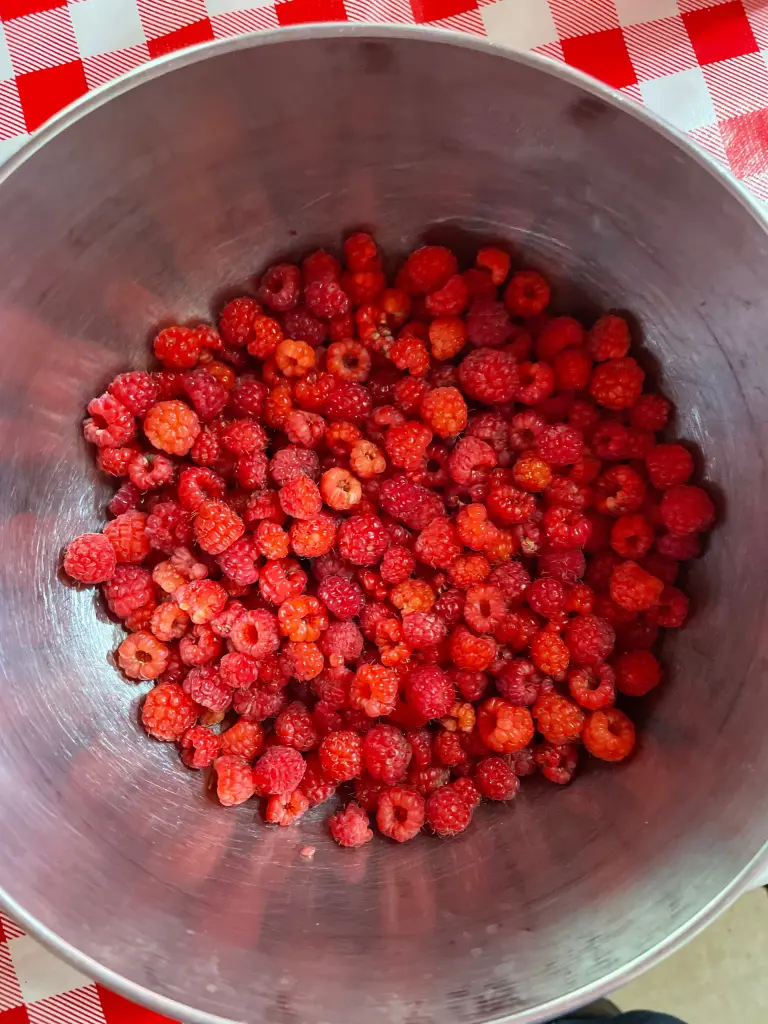
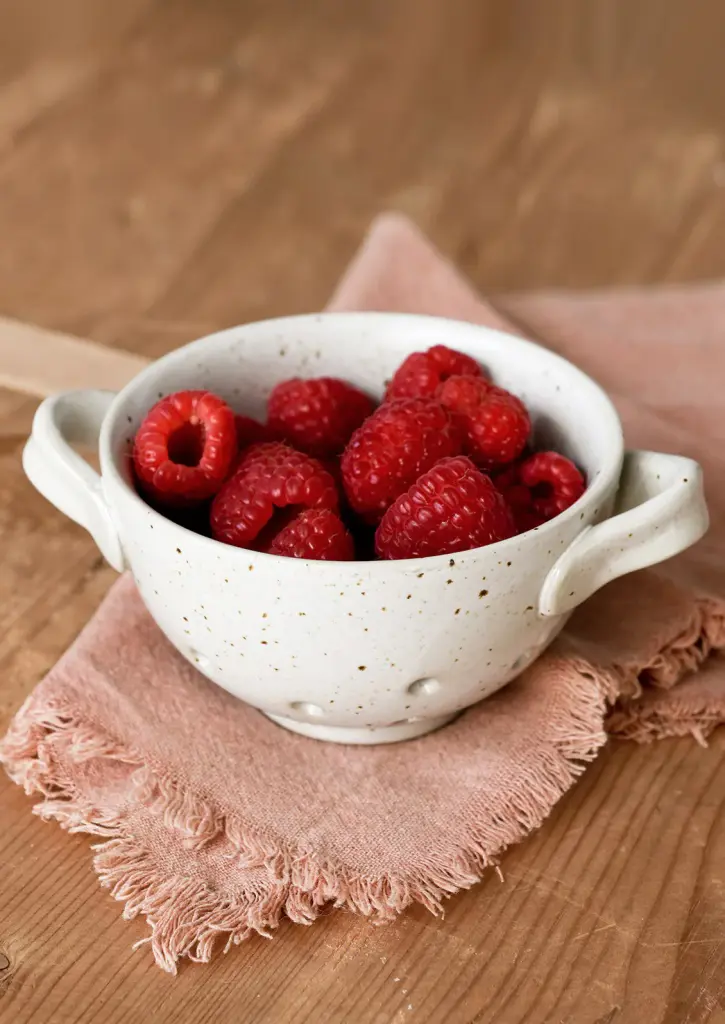
Fresh raspberries always add to the aesthetics of any plate of food with their great colors and the balanced sweet-tart flavor they wonderfully contribute. They are very juicy and could be used to make any dessert, salad, or even savory dishes tastier. But they are quite delicate and require thorough washing to avoid premature spoilage.
Those who wonder how to clean raspberries can rest assured: proper techniques will allow the fruit to remain whole, fresh, and usable. The knowledge of these careful techniques for washing and drying will assure quality and flavor for any of these fragile fruits.
Best Ways To Clean Raspberries
Raspberries often hide many dangers, even though they may appear pristine. These small, tender fruits bring along the hidden pests, parasites, dirt, and other debris that one cannot easily see. Therefore, even if raspberries look immaculate, they might still have co-travelers you do not desire to host.
This underlines the very essence of washing raspberries properly before eating them or using them in any recipes you prepare. Here are the right ways to wash raspberries, so you can eat all the sweet berries you want without fretting over what may be hiding within.
1. Rinse Raspberries In Cold Water
Get your tools ready:
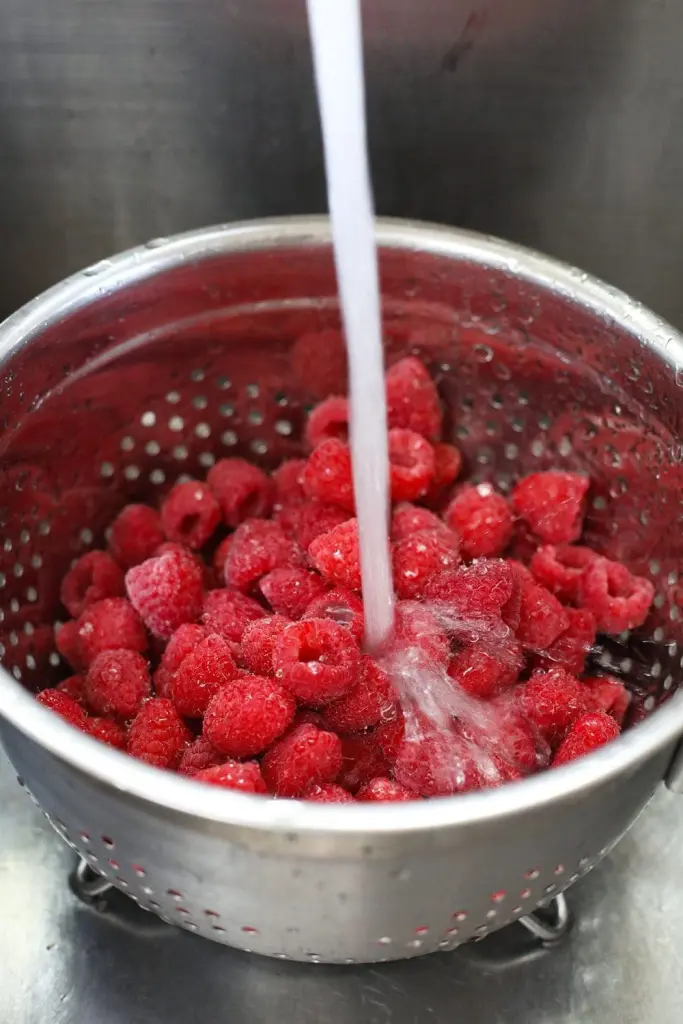
Have ready a colander and a large bowl of cold water. This colander needs to be big enough to hold the raspberries; don't crowd them.
Divide up the berries:
If you really have lots of raspberries, you must divide them up into portions. Then, each berry is going to get well cleaned without getting mushy.
Dunk and swirl:
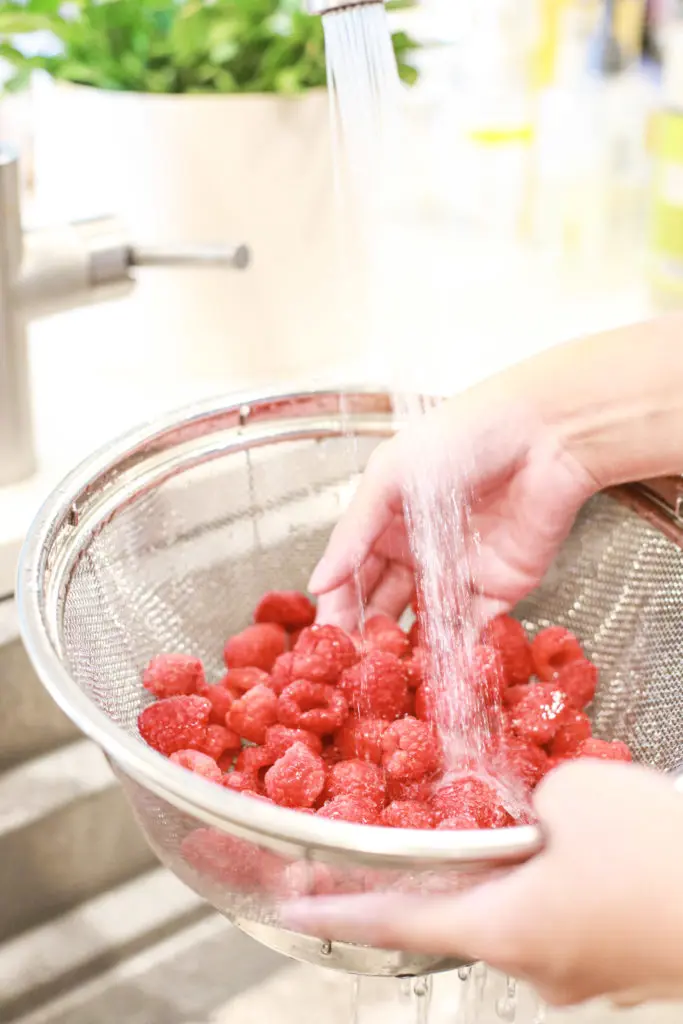
Slowly dip the raspberries colander into a bowl of cold water, ensuring that the berry is covered by the cold water. Swirl the colander in water gently for a second or two. The motion will loosen the dirt and debris without direct pressure to the berries.
Slowly lift the colander out of the water to allow excess water to drain out. If the water looks especially dirty you may want to do that once more with fresh cold water.
Air dry or pat dry:
Allow the berries to air dry in the colander, or, if you're in a huge hurry, you can gently pat them dry with paper towels.
2. Clean Raspberries With Vinegar Solution
Check and discard:
Inspect every raspberry for any sort of mold or rot. If just tiny amounts of mold are present, the spores may have already done their work on getting inside the berry. Take out suspicious berries so that they won't affect others. Do this to protect the vinegar bath from mold and other berries from it.
For this step, measure out 3 cups of cold water and 1 cup of white vinegar. Cold water helps keep the berries firm, while vinegar acts as a natural disinfectant. Gently stir the mixture to combine.
The resulting solution should be about 25 percent vinegar—enough to kill mold spores but gentle enough not to harm the delicate raspberries.
Soak the berries:
Gently drop the raspberries into the vinegar solution. Then, if in a bowl, gently swirl the water around the berries, and if in a salad spinner, slowly rotate it. The berries should be all submerged and agitated for some seconds, about a minute.
This agitation will allow the vinegar solution to get in contact with all surfaces of the berry, hence killing the mold spores.
Rinse thoroughly:
After soaking in the vinegar, drain the solution very well. Then, gently turn the berries to rinse all surfaces under cold running water. You may find you need to rinse several times to get rid of traces of the vinegar.
Smell the berries – if there is still a vinegar scent, keep rinsing. This step is very important so you don't lose your raspberries' natural flavor.
Dry carefully:
Place a lint-free kitchen towel or several paper towels on a flat surface. Gently spread the rinsed raspberries in one layer on a towel. Use another towel or paper towel and gently pat the tops of the berries.
Then very carefully roll or shuffle the towel to help dry the undersides of the berries, being very gentle not to crush or otherwise mess up the fragile raspberries. This should be properly dried since high moisture tends to support the fast growth of mold during storage.
While vinegar works wonders when it comes to cleaning raspberries, baking soda is an equally fine, more available substitute. Here's how to do it properly:
Prepare the solution:
Mix 1 tsp of baking soda into a large bowl of 4 cups of cold water until the baking soda is completely dissolved and the solution is clear.
Soak the berries:
Gently drop your raspberries into the baking soda solution. Let them soak for about 5 minutes. Baking soda does a great job of removing pesticide residues and dirt on the surface of berries.
Agitate lightly:
After soaking, use your hand to very gently swirl the berries in the solution. This does a nice job of dislodging remaining dirt or residues.
Rinse well:
Drain the baking soda solution and rise the raspberries well under cold running water. Be sure to wash well to remove all baking soda residue, which will affect the taste of the berries if not rinsed.
With the raspberries rinsed, place them on a clean kitchen towel or paper towels. Gently pat them dry, being very gentle to avoid crushing or bruising the berries.
Useful Tips & Tricks
These are the tips that will help you clean your raspberries right while keeping that smooth texture and juiciness. So go ahead with these steps, indulge in your berries fearlessly, knowing that they are clean and good to be consumed.
1. Clean your hands first
Remember to do hand washing with soap and water for not less than 20 before having contact with raspberries. This little measures ensure that germs do not transfer to your fruits.
2. Be gentle when washing
Raspberries are delicate. When rinsing them in a colander don’t pack them up. As the weight of the ones on top will crush those on the bottom.
3. Try a vinegar wash
To reach a higher level of clean up, make water with white vinegar solution. Three parts of water shall be poured in a bowl that contains one part of vinegar. Rinse your raspberries with water and place them in a colander then immerse it in this solution for one minute.
Then, the berries should be rinsed under cold water for 30 seconds respectively.
4. Do not use soap and commercial washes
Never use soap to clean raspberries. Soap can leave harmful residues on the fruit. Also, skip commercial fruit washes. Scientists aren't sure yet if these products are safe or effective.
5. Dry with care
Dry your raspberries with a clean towel or a new paper towel. This avoids them picking up new germs or dirt after washing.
6. Prepare before freezing
If you want to store them in the freezer, then it is wise to wash and dry them before that. One may also notice that, after freezing and, especially, after thawing, raspberries are too soft for washing. Ensure that they do not harbor moisture when you freeze them because moisture will turn to ice and hurt the fruit.
Washing raspberries is not only a simple cleaning or rinsing process but also gives protection to your health and enriches your eating experience. Here are some compelling reasons for cleaning raspberries:
1. Hidden Pollutants
Raspberries may appear pristine, yet they can harbor unseen dangers. Among these are:
Small insects
Microscopic parasites
Fine dirt or dust
Bacteria or other microorganisms
2. Potential Health Risks
Some dangerous elements can be hidden in unwashed raspberries, which can make a person sick. You won't feel them, but they can do their dirty work on your body.
3. Pesticide Residues
Like other berries, Raspberries may have residues of pesticides on their surface. Some of these chemicals wash off with rinsing.
4. Managing contamination
Contamination of most raspberries is likely since many people handle them from the farm to the store and eventually to your home.
5. Natural Debris
Raspberries grow outdoors, exposed to elements like dust, pollen, and small insects. These natural but unwelcome additions are washed out by rinsing.
6. More flavorful
Clean raspberries undeniably taste superior. Washing them eliminates any gritty texture caused by dirt or debris, enabling you to fully savor the fruit's inherent flavor. Peace of mind knowing your raspberries are clean gives you confidence in their safety, so you can enjoy them without a single worry.
Storing Washed Raspberries
How to keep the raspberries fresh and tasty for a long time? Here are easy steps to do this:
1. Dry the berries:
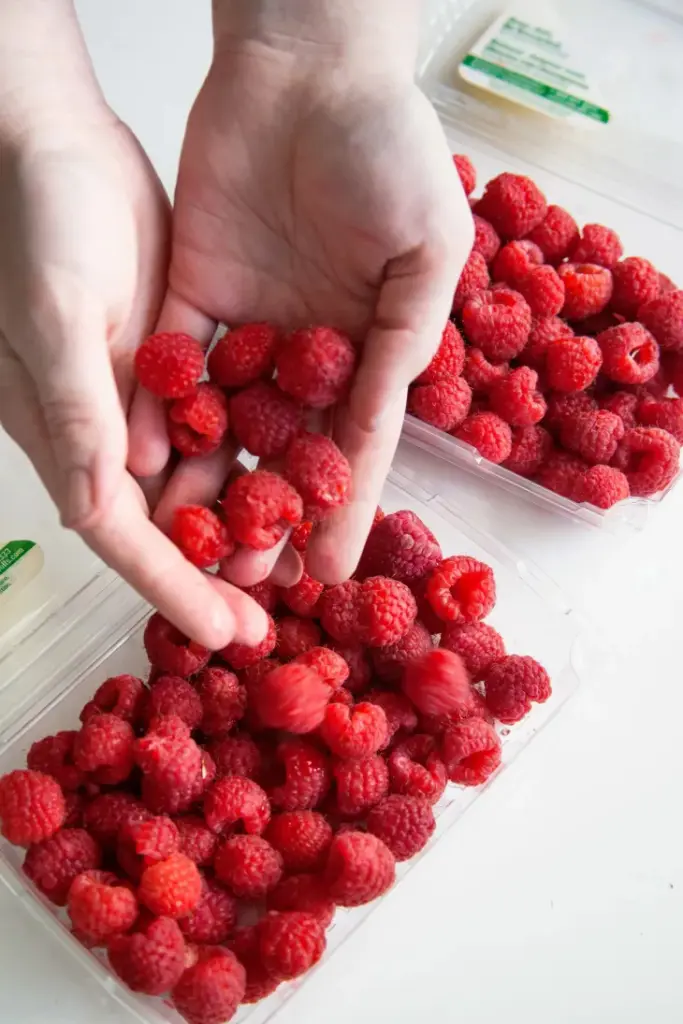
Spread your raspberries in one layer on paper towels. Let them sit for a few minutes to absorb any extra moisture. While they are sitting, examine the berries and discard any that have been squashed and those that are molding.
This is of critical importance as the berries will spoil very quickly when one of them begins the process of breaking down.
2. Using the proper container:
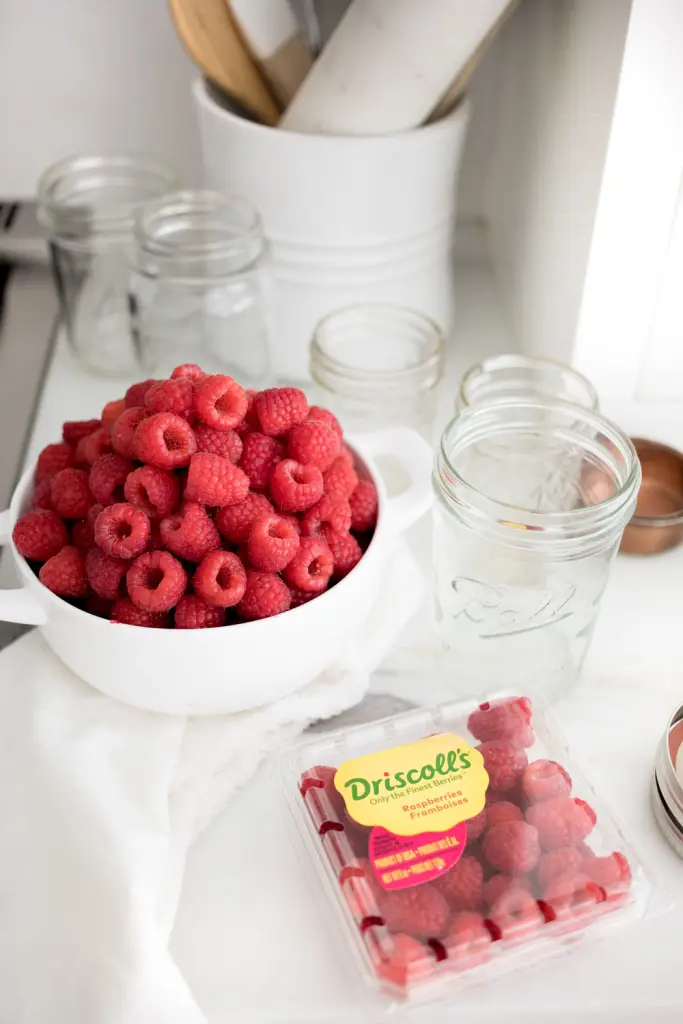
Put raspberries back into their original container, which are typically either a clamshell or a perforated box. This container is designed to allow air in and around the berries, keeping them dry and, therefore, free of mold.
The instant you dump raspberries from one container to another, a sad-contamination mistake is usually made. Feel tempted to dump raspberries from one container into another? Well, think twice, because when you do that you will also speed up bruising and crumpling of the little guys by increasing the contact between one another – which is bad.
3. Choose the perfect spot in your fridge:
Put the container of raspberries towards the front of one of your refrigerator shelves; do not store them in the back of the fridge or in the crisper drawer. These are all regions inside the fridge that are of higher humidity.
By storing the berries towards the front of a shelf in the refrigerator, they not only are in prime storage position, but are in your way so you are remembering to eat these delectable fruits.
4. Wash just before eating:
Wash the raspberries shortly before you intend to eat or cook them. Add to cream, folding; or for baking, pat the washed berries lightly with paper towels to remove surface moisture.
Author
Editor
Elias Mansour
Elias Mansour is an experienced Sous Chef currently working at Hilton Ras Al Khaimah in the UAE, where he brings his culinary expertise and passion for fine dining to create exceptional experiences for guests. Elias’s culinary journey includes serving as Junior Sous Chef at the prestigious Jumeirah Hotel at Etihad Towers and working at Al Habtoor Grand Resort, Autograph Collection, where he further refined his skills and leadership in the kitchen.
Originally from Abu Dhabi, Elias studied at The National Evangelical School - Hims, which laid the foundation for his career in hospitality. Now based in Dubai, Elias continues to contribute to the culinary scene in the UAE, using his global experience to innovate and lead in the kitchen.