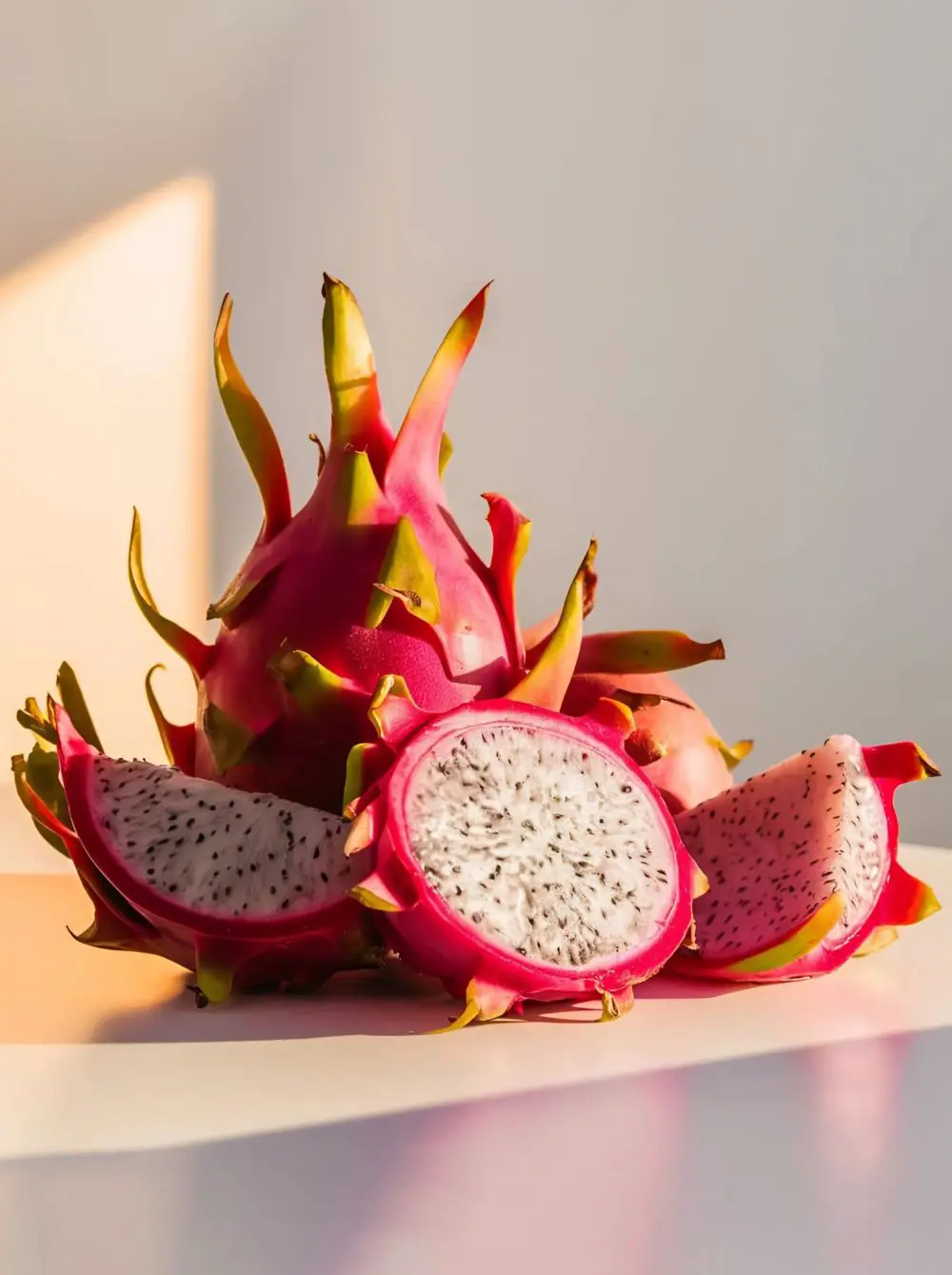
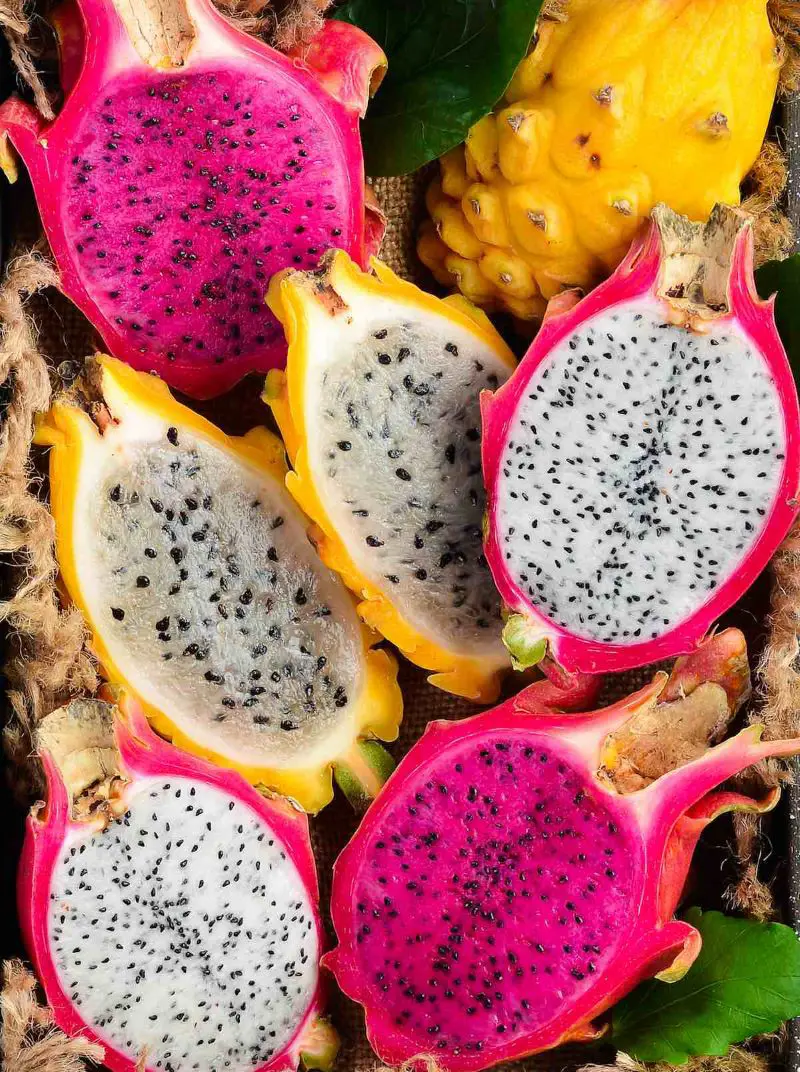
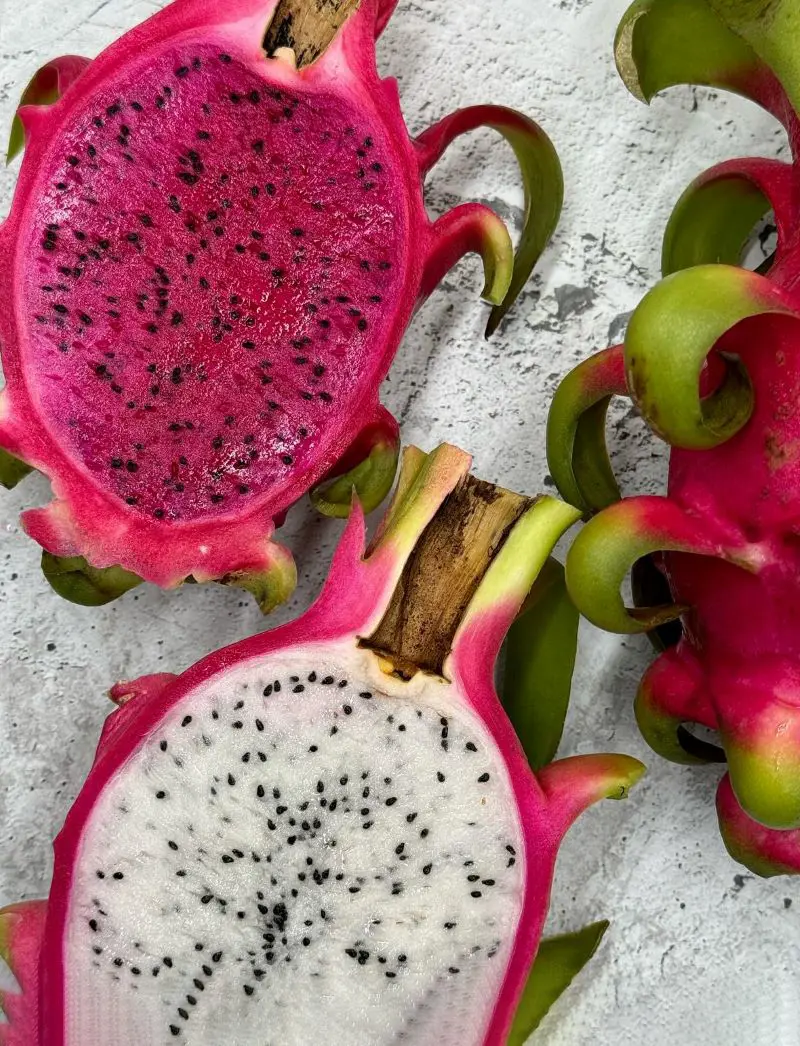
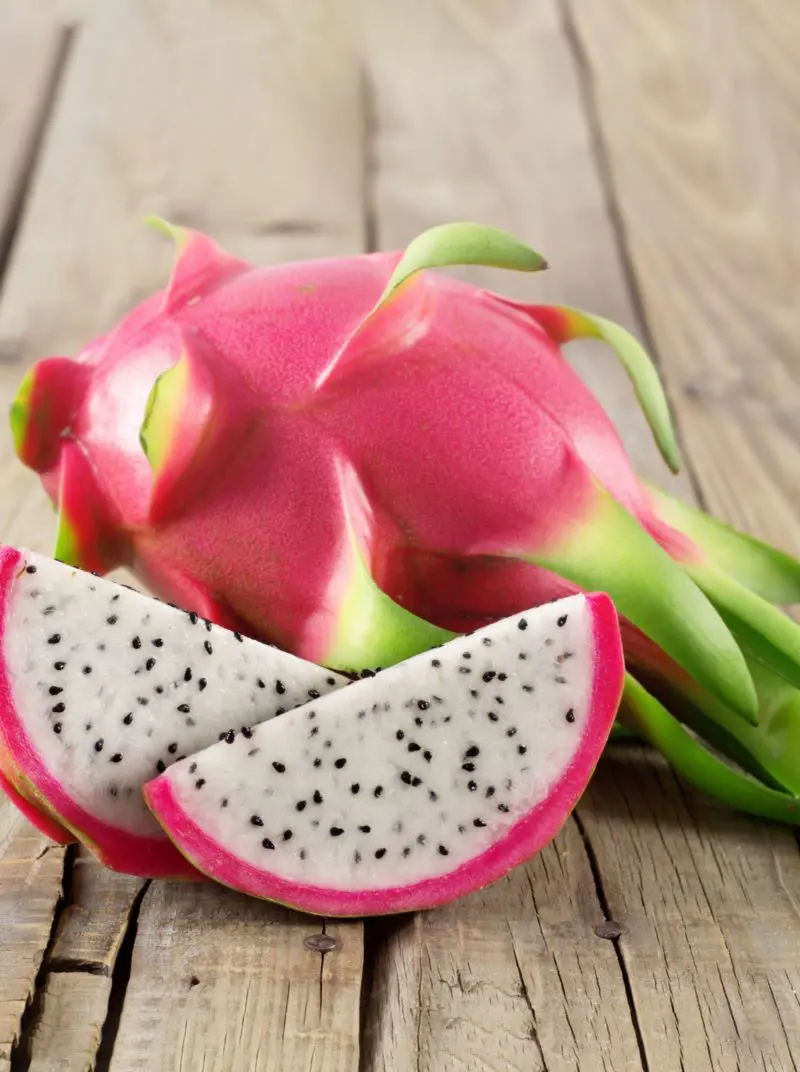
Even if you've in no manner eaten dragon fruit, there's a chance you have seen it in the grocery shop, as part of a fruit salad, or on the net. Also called pitaya, this difficult-to-miss tropical fruit is known for its striking appearance, with vivid pink or yellow skin and white or pink flesh speckled with tiny black seeds.
If you have been keen to try this unique fruit and curious about how it would taste, hesitate no greater. Here, we will dive into the information on the fruit's flavor, texture, health benefits, and others. You'll additionally learn how to pick, eat, and use dragon fruit in diverse recipes.
The prime time for fresh, ripe dragon fruit is from June to September, according to the Agricultural Marketing Resource Center. Most varieties are at their top in August and September, despite the reality that the yellow-skinned, white-fleshed variety on occasion be located in winter, in particular from November to February.
The real timing can vary slightly depending on the particular place and weather situation. In tropical and subtropical regions, dragon fruit trees can bloom and convey fruit year-round. However, the peak season is regularly at some point in the warmer months when the plants receive ample sunlight and moisture.
It's crucial to observe that dragon fruit is a seasonal crop so availability can range throughout the year. During peak season, you'll in all likelihood find a wider variety of dragon fruit and at greater low-priced costs.
Many people are easily intimidated by odd-looking produce and might be a little reluctant to try the exotic dragon fruit. However once they finally do, they'll be satisfied they did as it’s scrumptious!! Ripe dragon fruit has a mildly sweet taste often described as a blend of kiwi and pear with a tender texture similar to that of a ripe kiwi.
Before trying, ensure the fruit is ripe, as under-riped dragon fruit is largely flavorless. Let's learn more about the taste of this fruit in detail.
The Flavor
Imagine if a kiwi and a pear had been to merge their flavors. Dragon fruit will be the result. Its taste is a nice blend of slight sweetness with a hint of earthy notes, kind of like a pear that's been whispering sweet nothings to a kiwi.
The sweetness isn't always overpowering; the white flesh gives more of a gentle, candy caress to your taste buds.
The Texture
Let’s be honest: texture can really influence how we experience fruit. Dragon fruit has a captivating texture that's a treat for your mouth. It’s like a less fuzzy model of a kiwi, with tiny black seeds that take center stage. These seeds offer a delightful crunch that's irresistibly pleasant. Oh-so-addictive!
It’s as though nature hosted a party wherein crunchy and smooth elements danced collectively, creating a texture that’s as playful and fascinating as the fruit’s appearance.
Dragon fruit is normally candy, however the precise sweetness can vary depending on elements like variety, ripeness, and growing conditions. When ripe, dragon fruit regularly has a subtle sweetness with a hint of floral or citrusy notes.
However, some varieties may have a barely tangy or tart flavor, mainly if they're no longer completely ripe.
Does Dragon Fruit Taste Like Nothing
As mentioned earlier dragon fruit has a mild and subtly candy taste that a few individuals describe as being much like a combination of kiwi and pear. Its flavor isn't very robust or excessive, that is why a few individuals might suppose it tastes like nothing much.
The fruit has a refreshing and particular texture, but its taste profile is pretty diffused. This makes it a pleasing addition to fruit salads or smoothies, in which its flavor blends nicely with other culmination. While it could not be the boldest fruit in phrases of flavor, its vibrant color and texture can make it an exciting and visually attractive choice.
Pink-skinned dragon fruit is the most common variety found in the US. The fruit is harvested before it is fully ripe for easy shipping: this manner it is firmer and less likely to get damaged or break during transporting. This type is sweeter than the white type. The sticker on the dragon fruit must tell you the color of the flesh inside.
If it does not, you can often guess based on the shape: red-fleshed dragon fruit is generally round with short wings, while white-fleshed dragon fruit is longer with longer wings. When deciding on dragon fruit at the market, search for fruit that is heavy for its size. This shows that it's juicy.
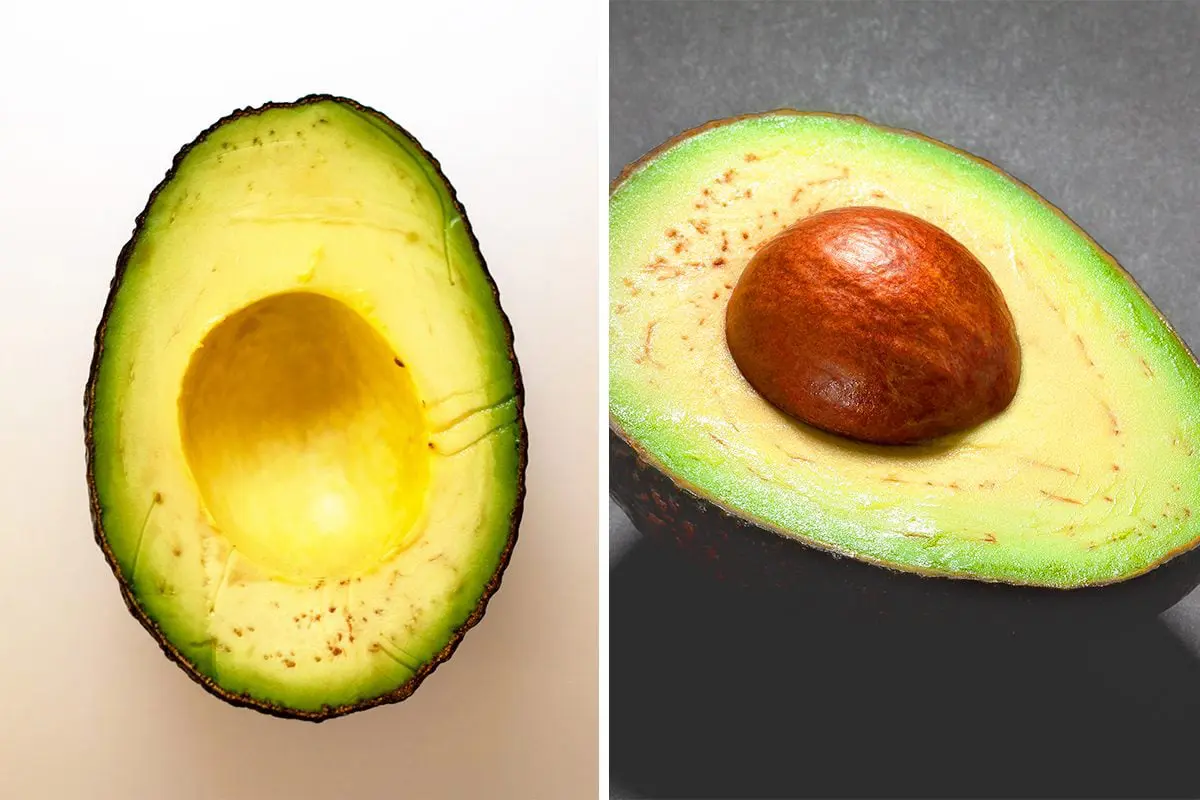
The fruit needs to be a constant pink color on the outside and free from bruises. It should feel slightly firm but give in to gentle pressure like a ripe avocado. Ripe dragon fruit will have dried-out wings which are yellow with brown tips.
If you purchase dragon fruit before it reaches this stage, leave it on the counter until it does, after which it is ready to consume.
Dragon fruit, like avocados and apples, is nice when purchased entire and sliced simply before eating. Store them at the counter until you are geared up to use them. If you've got leftover sliced dragon fruit, shop it in an airtight container in the fridge for up to a day. If it begins to brown or get gentle, it's time to throw it away.
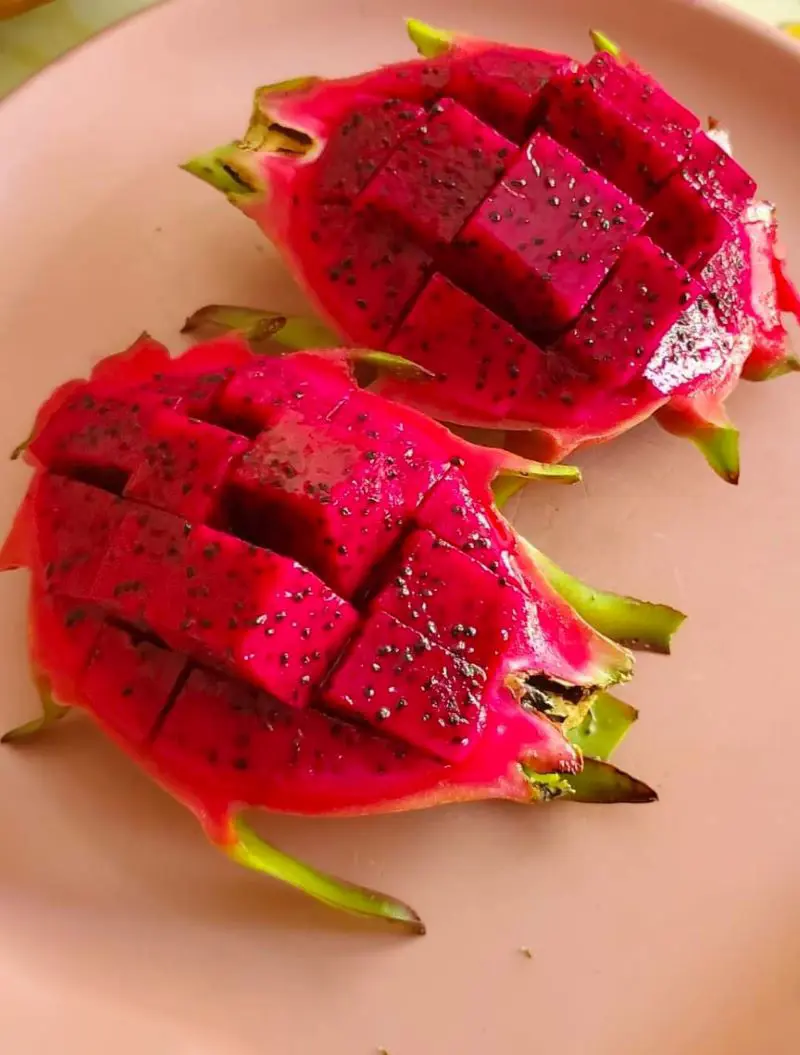
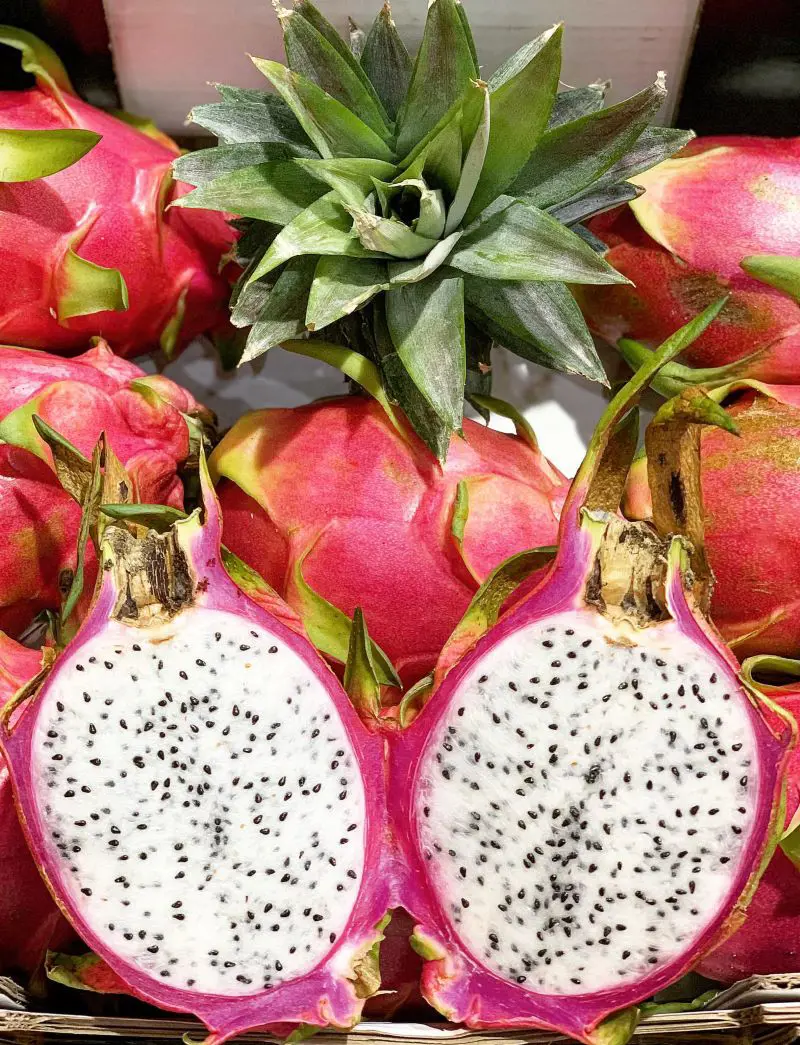
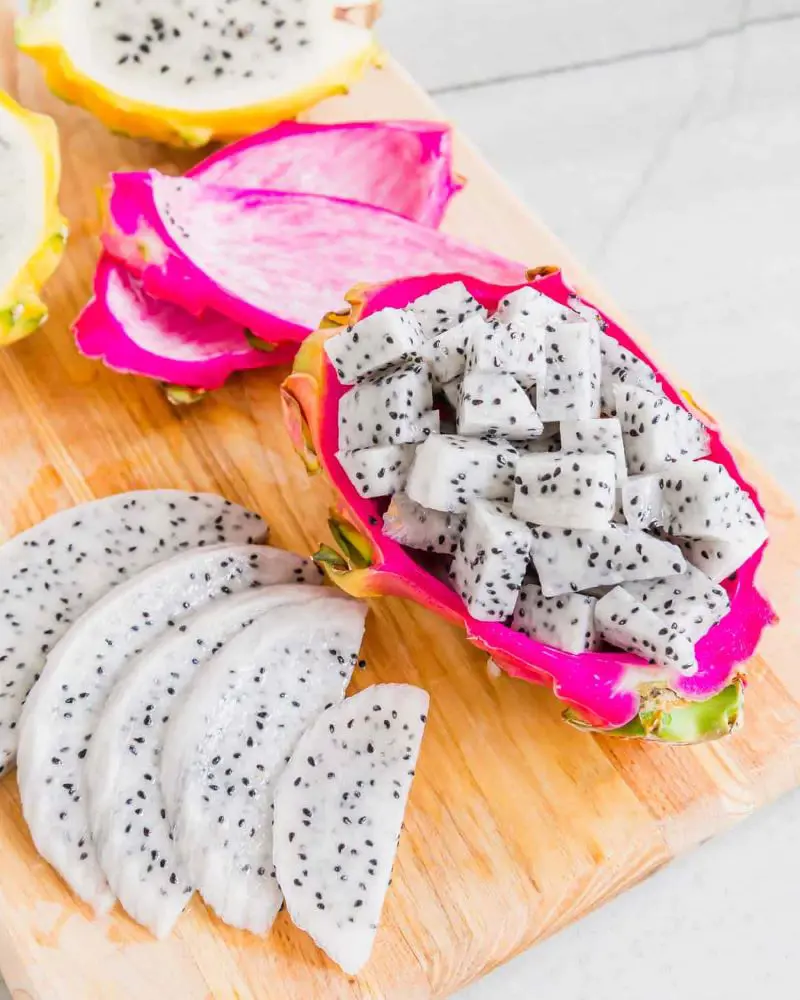
When you're ready to revel in your dragon fruit, accumulate a cutting board and a sharp knife. Slice the fruit lengthwise from stem to root to make two halves. Use a spoon to separate the flesh from the skin by tracing around the inside. Place the flesh on the cutting board, check for any remaining bits of skin, and remove them if needed.
Otherwise, you can either cube or slice the flesh to eat it plain or use it in one of the dragon fruit recipes provided. Alternatively, you can cut the dragon fruit in half, slice it, and enjoy each piece like a mini watermelon slice, with the rind still on.
Dragon fruit is also a popular addition to smoothies and drinks, such as margaritas. If you prefer red dragon fruit, you can purchase frozen bags of pre-cut cubes or pureed fruit.
Dragon fruit is high in vitamins C and B, in addition to powerful antioxidants. Vitamin C and antioxidants support healthful skin and may assist slow down aging. While the fruit's flesh provides beneficial fiber to your gut, it is the seeds that maintain the actual strength.
Unlike a few seeds that need to be ground to access their nutrients (like flax seeds), the natural microorganism in your gut can break down the fibrous shell of dragon fruit seeds, releasing their prebiotic blessings.
This fruit is likewise wealthy in magnesium, which promotes better sleep, and is one of the few plant-based sources of iron, in conjunction with different crucial nutrients and minerals. Additionally, when you consider that dragon fruit is ordinarily made from water, it offers superb hydration.
It's additionally low in calories, with one cup (approximately 227 grams) containing more or less 60-70 calories.
Who does not love a yogurt parfait? Adding dragon fruit gives it an interesting twist that’s sure to impress. These beautiful red and white parfaits, with their sweet and smooth texture, stand out from others you’ve tried. They make a really perfect vegan-friendly breakfast for both children and adults.
With dragon fruit, honey, yogurt, banana, blueberries, and granola, this single cup packs loads of delicious flavors and plenty of vitamins and nutrients.
Frozen Dragon Fruit Margarita
Looking for a refreshing drink? Try this margarita. Just blend together a 3.5-ounce package of frozen unsweetened dragon fruit puree, 1 ounce each of light agave syrup, 2 ounces of silver tequila and fresh lime juice, 1/4 teaspoon of grated lime zest, and 1 cup of ice until it is thick and clean.
Serve it in a glass rimmed with salt for a truly invigorating experience!
Dragon fruit salad is quick and smooth and is derived collectively in just mins, and it’s low calorie and loaded with nutrients! Dice 1 dragon fruit, 1 cup of pineapple chunks, and 1 cup of strawberries. Toss with 2 tablespoons of lime juice and a handful of fresh mint leaves.
Mix well and serve chilled for a refreshing, colorful salad.
Dragon Fruit Smoothie
The fruit is lovely and adds a colorful magenta hue to smoothies and smoothie bowls, best in your Instagram feed. These smoothies can brighten your day and, if you have a young one at home, might be an amusing way to help them reach their 5-9 servings of fruit and veggies every day.
Even the pickiest eaters are often attracted to a colorful, enjoyable smoothie. This one is a creamy blend of dragon fruit, mango, and banana. With dragon fruit's moderate flavor, a touch of fresh lime complements the tropical flavor.
Dragon Fruit Granita
To create this tasty, shaved ice-style treat, you'll simply need sugar, dragon fruit, water, and lime juice. Just 4 easy ingredients. It simply takes about 10 mins to prepare, but you'll want to freeze it for 8 hours before serving.
The end result is a cute pinkish-red dessert with an excellent blend of sweetness and tartness. It's positive to be a hit, specifically with children.
Dragon fruit pudding is similar to a dragon fruit smoothie but has a thicker, pudding-like consistency. Making it is just as smooth and takes only five minutes. For the optimal flavor, serve it cold and let it chill for 1 to 3 hours. This chilling time also allows the chia seeds to fully expand, providing all their health benefits.
FAQs
What does white dragon fruit taste like?
White dragon fruit has a mildly candy and barely tangy flavor. Its flavor is often in comparison to a combination of kiwi and pear, with a subtle trace of watermelon.
The fruit's flesh is white with tiny black seeds scattered in the course of, and it has a juicy quality. The sweetness can vary depending on the fruit's ripeness, however, it is a mild and quality flavor that isn't overpowering.
Do dragon fruits taste good?
Yes, dragon fruits taste good! They have a sweet, slightly floral flavor, and the flesh is juicy and refreshing.
What does a dragon fruit look like?
Dragon fruits are a unique-looking fruit with vibrant colors. They typically have bright pink or red skin, often with green scales. Inside, the flesh is white or red, with small black edible seeds.
Can you eat dragon fruit daily?
Definitely! Dragon fruit is packed with vitamin C and antioxidants so if you enjoy it, you can certainly include it in your diet daily. Just keep in mind that it’s high in fiber, and consuming it in excessive amounts might cause gas, bloating, or cramping.
Author
Editor
Ranaj Ramakrishnan
Ranaj Ramakrishnan is a highly skilled and accomplished Chef, currently serving as the Head Chef at Inhabit Restaurant. With a rich career spanning prestigious hotels and resorts, Ranaj has held key culinary positions such as Sous Chef at Café de l'Esplanade, Executive Sous Chef at Fly High Kochi, and Sous Chef at Niraamaya Retreats and The Leela Kovalam, A Raviz Hotel. His earlier experience includes working at Jumeirah at Saadiyat Island Resort, Bulldozer Group Dubai, and Conrad Abu Dhabi Etihad Towers, where he refined his skills and leadership abilities in world-class kitchens.
Ranaj’s culinary journey began after his education at St. Joseph's High School, Mathilakam, and has taken him through a variety of international and Indian establishments. His passion for fine dining and attention to detail have established him as a respected figure in the hospitality industry.
Based in Thrissur, India, and originally from Koolimuttam, Ranaj continues to inspire and lead with his innovative approach to cooking and commitment to excellence in every dish.